
Over the past decade, the way our young people spend their time has completely changed.
Psychologist Jonathan Haidt’s book, The Anxious Generation, sparked a crucial conversation for educators and parents across Aotearoa. He argues that the sudden shift from a play-based childhood to a phone-based childhood has driven up youth anxiety and depression, leaving many young people feeling isolated and overwhelmed.
But there’s another missing piece in the lives of our tamariki when they spend hours scrolling: a sense of purpose.
When a young person’s world shrinks to the size of a screen, they lose the chance to see how their actions can positively impact others. They lose the chance to matter to their community and discover their sense of belonging.
Why contribution matters
Today, we often hear from teachers who notice their students are struggling to connect in the real world – with peers, their community, and the natural environment.
This matters. The New Zealand Curriculum clearly highlights “participating and contributing” as one of its key competencies. To be active, confident learners, our youth need real-world opportunities to give back. They need to know their presence makes a difference in the world and they are valued.
At the William Pike Challenge (WPC), we know that one of the fastest ways to build resilience, connection and self-worth is through Community Service.
When young people step away from their devices and give their time to help someone else, the focus shifts from “me” to “we.” They realise they have skills and the classic kiwi ‘get-up-and-go’ attitude that’s so valuable to others.
The proof is in the student outcomes
Community service creates a safe place for young people to step outside their comfort zones, practice social skills, and face manageable challenges.
Take this incredible example from one of our 2025 WPC students:
“Before the William Pike Challenge I spent Tuesdays just watching Youtube, but now after school I go to St Andrews Retirement Village and play chess with one of the residents.”
– Student, Sacred Heart College
That is a young person who has swapped isolated screen time for real-world connection.
Or consider how giving back can combat social anxiety and build confidence ahead of the big leap to high school:
“Before doing William Pike I was scared to talk to anyone I didn’t know… After doing an hour a week of helping out at the library I slowly became more and more confident talking to anyone. This has helped me so much especially as I am going to high school next year.”
– Student, Rangiora Borough School
It also allows students to take their own passions and turn them into a vehicle for good:
“I began learning how to crochet by making granny squares… The lady helping me out at the church was part of a project to make blankets for young mothers and their babies. With my newfound crocheting abilities, I offered to help her.”
– Student, Kohimarama School
Measuring the impact
We see this growth happen every single year. In our 2025 WPC student survey, which gathered feedback from 291 students across 92 different schools – the results were clear:
- 90% of students agree that after doing the WPC, they want to help people when they see them struggling.
- 85% want to continue helping their local community.
- 88% feel more confident working with people of different ages and personality types.
- 83% report feeling more connected to their family, friends, and teachers.

Purpose is the solution
If a phone-based childhood is causing disconnection, then community contribution is the solution.
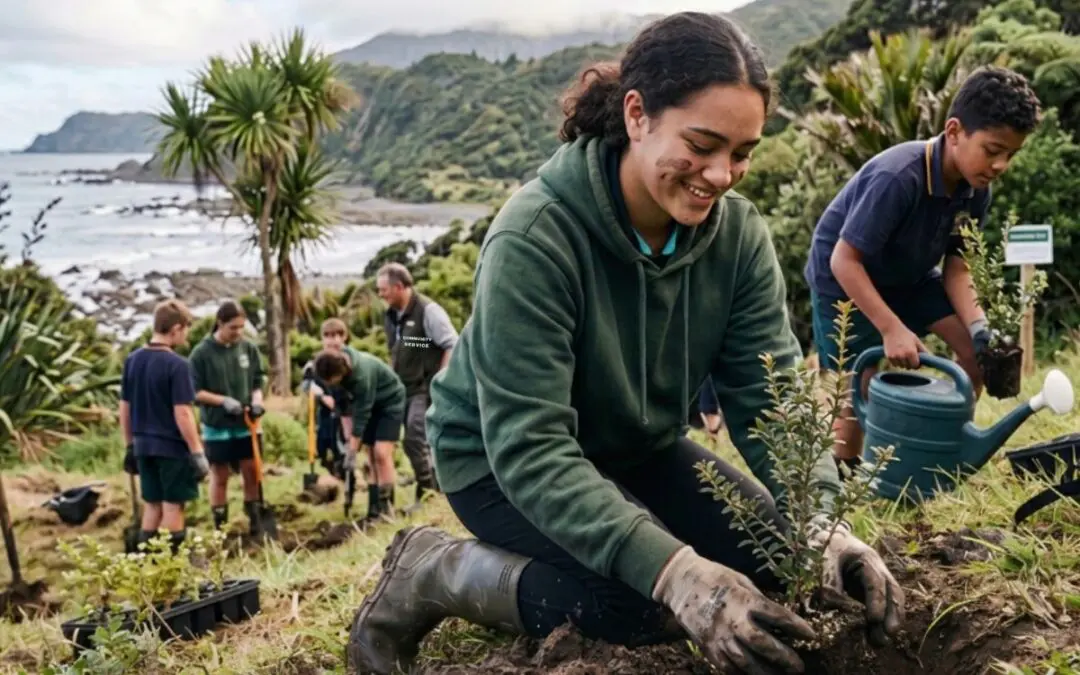
When our tamariki help out at a local library, plant trees in a local reserve, or play chess with a retiree, they are doing more than just completing a task. They are discovering who they are. They are building a genuine sense of belonging. They are developing a sense of connection with local people and places.
We can’t solve all the challenges of today’s digital world overnight. But we can provide our young people with structured, meaningful opportunities to contribute. Because when they contribute, they find their purpose.
Recent Comments